
Rummy Indian Rules: Mastering Strategies for Points vs. Pool Rummy
Mastering Rummy Indian Rules is the foundation of every successful game night on Rummy Connect. These rules govern everything from how you arrange your starting hand to how you claim victory over your opponents, and they apply consistently whether you’re a first-time player or a seasoned regular. This guide walks through the Rummy Indian Rules that matter most for two of the platform’s most popular formats. Points Rummy and Pool Rummy along with the indian rummy scoring system and rummy points calculation methods that decide who wins and who doesn’t.
By the end of this guide, you’ll understand the core mechanics, the scoring logic behind each format, and the practical strategies that separate confident players from beginners.

Understanding Rummy Indian Rules: Basic Gameplay Explained
Before diving into advanced strategy, it helps to revisit the foundation that every match is built on. Under standard Rummy Indian Rules, thirteen-card rummy is played with each player dealt 13 cards at the start of the round. The objective is to arrange these cards into valid sequences and sets before anyone else does.
Key definitions every player should know:
- Sequence — three or more consecutive cards of the same suit
- Set — three or four cards of the same rank, across different suits
- Pure sequence — a sequence formed without using any joker
To make a valid declaration under Rummy Indian Rules, a player must form at least two sequences, and at least one of them must be a pure sequence. Matches are played with standard 52-card decks, supplemented with printed and wild jokers that add an extra layer of decision-making to every hand.


Rummy Points Calculation in Points Rummy
Rummy points calculation works differently depending on the format, and Points Rummy is where this matters most. Points Rummy is a fast-paced format where the objective is simple: keep your total points as low as possible. The round ends the moment one player makes a valid declaration, at which point every other player is scored based on the unmatched cards left in their hand.
Because rummy points calculation in this format is immediate and unforgiving, a few habits make a measurable difference:
- Prioritize your pure sequence before anything else
- Discard high-value face cards early if they aren’t part of a sequence
- Track the open discard pile to read what opponents need
- Use the Auto-sort tool to keep your hand organized under time pressure
Rummy Connect also allows players to drop out of a hand for a fixed, reduced penalty. If a starting hand is genuinely unworkable, an early drop under Rummy Indian Rules often protects your score better than playing the hand out.
Indian Rummy Scoring System: How Points Are Calculated
The Indian rummy scoring system is what ultimately determines a winner, and understanding it early prevents costly mistakes later in a match. Every card carries a specific point value when it remains unmatched in your hand at the end of a round:
Card Type | Point Value |
Face cards (King, Queen, Jack) | 10 points each |
Ace | 10 points |
Numbered cards (2–10) | Equal to face value |
Jokers | 0 points |
If a player fails to form the mandatory pure sequence, every card in their hand is counted toward their penalty score regardless of how well the remaining cards are grouped. This single rule within the Indian rummy scoring system is one of the most common reasons new players lose more points than expected, so prioritizing the pure sequence from the very first draw is essential.

Mastering Rummy Indian Rules for Wild Joker Strategy
Pool Rummy is built for players who prefer a longer, more strategic format. Instead of a single fast round, Pool Rummy is a tiered elimination format typically 101-point or 201-point pools where players are eliminated once their accumulated score crosses the threshold.
Applying Rummy Indian Rules correctly over multiple consecutive rounds is what separates long-term survivors from early eliminations. On Rummy Connect, Pool Rummy tables are capped at six players, which speeds up turn rotation and gives each player a slightly higher chance of drawing the cards they need.
Effective survival tactics include:
- Playing conservatively in the early rounds to keep scores low
- Securing your pure sequence before pursuing riskier combinations
- Holding onto the Wild Joker to close out sets efficiently
- Monitoring opponents’ accumulated scores to judge when to play aggressively or take a mid-hand drop
A mid-hand drop carries a higher penalty than an initial drop, but it’s still often the smarter choice when an opponent is clearly close to declaring.
Using the Auto-Sort Feature Efficiently
Managing 13 cards on a mobile screen under time pressure isn’t always easy, which is why Rummy Connect includes an Auto-sort tool. Instead of manually rearranging your hand, a single tap groups your cards into valid sequences and sets automatically, based on Rummy Indian Rules logic.
This feature is particularly useful for:
- New players still learning valid combinations
- Fast-paced Points Rummy rounds where timing matters
- Avoiding accidental invalid declarations under pressure
Auto-sort doesn’t play the hand for you, it simply removes the manual overhead so you can focus on strategy rather than visual organization.
Hosting a Rummy Private Table in Rummy Games
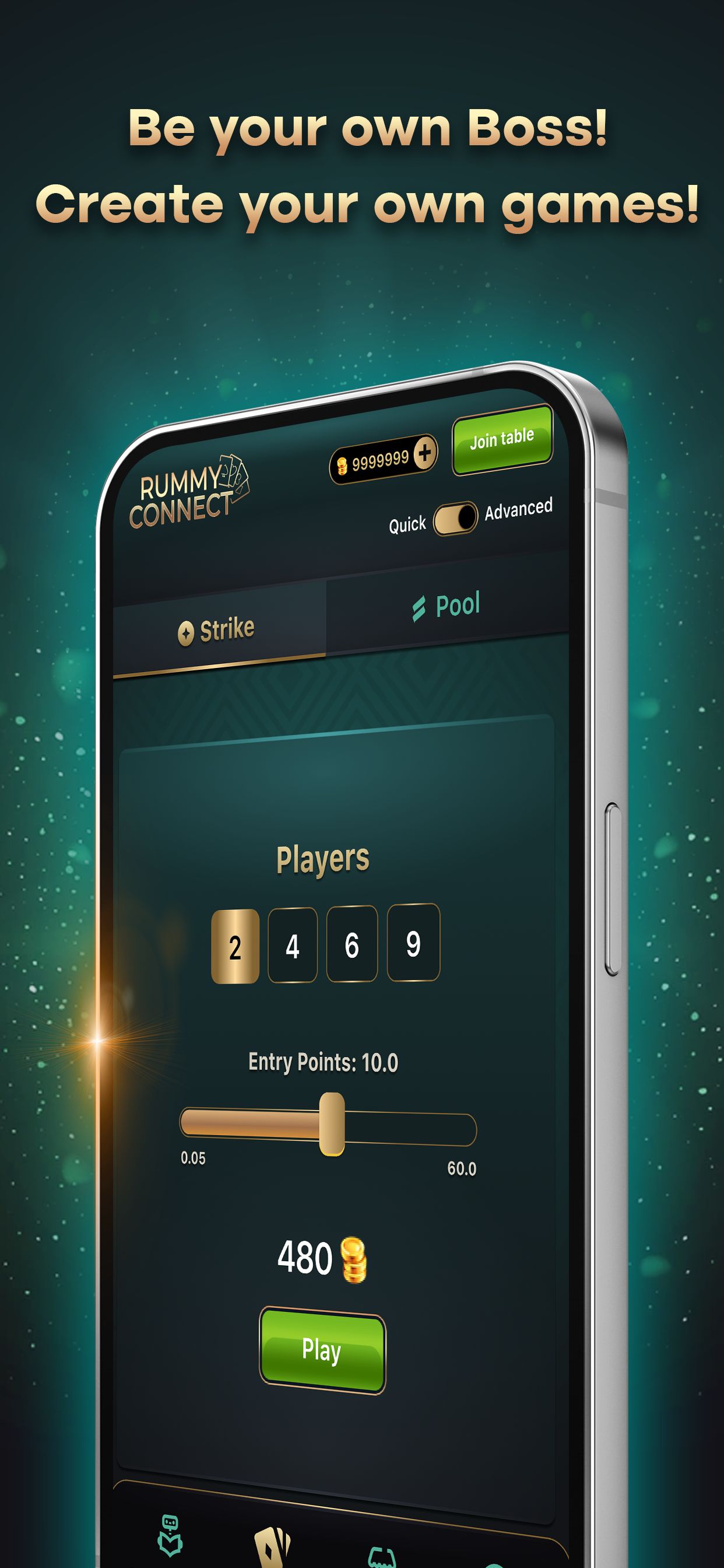
Beyond competitive matchmaking, Rummy Connect supports a Rummy Private Table feature for players who want to game exclusively with friends. Setting one up takes a few steps:
- Navigate to the dashboard and select the option to create a private table
- Choose your preferred format — Points Rummy or Pool Rummy — and customize the rules
- Generate a unique table code or invite link and share it with your group
- Wait for invited players to join, then start the round as host
Private tables also include integrated voice chat and in-game messaging, so players can talk strategy or socialize in real time without needing a separate app.
Fair Play and Trust: How Rummy Indian Rules Are Enforced
Trust in the system is what keeps competitive digital card games sustainable, and Rummy Connect treats Rummy Indian Rules enforcement as a core part of the platform, not an afterthought. Every shuffle, toss, and card draw is generated through randomized, monitored processes, and Admin Services conduct ongoing real-time monitoring across live games.
The platform’s rules engine also automatically validates every declaration. If a player attempts an invalid declaration, the standard penalty is applied immediately and consistently — removing ambiguity or manual dispute from the outcome. This automated enforcement of Rummy Indian Rules is designed to let players focus entirely on strategy, with confidence that scoring and outcomes are handled fairly.
Rummy Connect also maintains:
- 24×7 customer support for account, gameplay, and technical questions
- Verified account requirements before any wallet funds can be moved
- Transaction history and account status tracking for all players
- Multi-platform support across Android and iOS
Putting It All Together: Rules, Scoring, and Strategy
Understanding Rummy Indian Rules in isolation only gets a player halfway there – real consistency comes from connecting the rules to the numbers behind them. The indian rummy scoring system exists to enforce the rules with a real cost: skip the pure sequence, and the scoring system turns every card in your hand into a penalty, regardless of how the rules were technically followed elsewhere. That’s the link most players miss early on.
Rummy points calculation is where this becomes practical rather than theoretical. In Points Rummy, a single unmatched King left in your hand at the wrong moment can cost as much as an entire failed hand in Pool Rummy spread across several rounds. Strong players don’t just memorize Rummy Indian Rules – they think in terms of the indian rummy scoring system on every turn, weighing what a card is worth against the risk of holding it one turn too long.
This is the mindset shift that separates a player who knows the rules from one who wins consistently: treating every decision as a rummy points calculation in progress, not just a move that’s technically legal under Rummy Indian Rules.
Common Mistakes to Avoid
Even experienced players occasionally fall back into habits that cost them points. The most common ones include:
- Ignoring the open discard pile instead of tracking opponents’ moves
- Holding onto face cards too long in Points Rummy
- Delaying the pure sequence in favor of other combinations
- Skipping the Auto-sort tool during high-pressure turns
Avoiding these mistakes, combined with a solid grasp of Rummy Indian Rules, is usually enough to noticeably improve consistency over time.
Put Your Rules Knowledge to the Test
Learning the theory is only half the game, the real test comes at the table. The moment you sit down for your next hand, everything from your pure sequence to your joker timing to your point-by-point scoring decisions comes together in real time. You get all the strategic depth of a genuine skill-based card game, backed by a platform built for fairness and transparency. If you’re finally ready to move from reading the rules to actually applying them, it’s time to take a seat. Open the app, invite your friends to a private table, and get ready to put your Rummy Indian Rules knowledge into action.





Frequently Asked Questions
What are the basic requirements to win under Rummy Indian Rules?
You’re dealt 13 cards and must arrange them into valid sequences and sets. A valid declaration requires at least two sequences, one of which must be a pure sequence containing no jokers.
What is a pure sequence, and can a Wild Joker be used to form one?
A pure sequence is three or more consecutive cards of the same suit. Wild Jokers and printed jokers cannot be used to form it only natural cards count.
How does the indian rummy scoring system handle face cards?
Face cards and Aces carry 10 points each if left unmatched, while numbered cards count at face value. Jokers carry zero points.
How is rummy points calculation different in Pool Rummy vs. Points Rummy?
Points Rummy scores and ends after a single declaration, while Pool Rummy accumulates points across multiple rounds until a player crosses the elimination threshold (101 or 201).
What’s the best survival strategy for Pool Rummy?
Play conservatively early, secure your pure sequence first, and hold onto Wild Jokers to close sets quickly. If a starting hand is weak, an early drop often costs less than playing it out.
How does the Auto-sort tool work?
It automatically groups your hand into valid sequences and sets with a single tap, reducing the risk of accidental invalid declarations.
Can I play private games with friends?
Yes. The Rummy Private Table feature lets you create invite-only lobbies, customize the format, and use built-in voice chat and messaging during the game.
How does Rummy Connect ensure fair play?
Centralized Admin Services monitor games in real time, and every shuffle and declaration is validated automatically to enforce consistent, unbiased outcomes.
Is the in-game virtual economy secure?
Yes. Coins are purchased through a secure in-app shop, and full account verification is required before any funds can be withdrawn or transferred.